Summary
An Embrace Experience is not “an activity”. It is a space where people experience things differently from what they are used to.
An Embrace Experience is not “an activity”. It is a space where people experience things differently from what they are used to.
Our experiences are not just activities. They are spaces where people truly connect.
They are designed using the Design For All methodology and co-created together with the ambassadors and associations in our team. Accessibility is not something added at the end: it is the starting point.
Some of our experiences
Blind Wine Tasting: guided tastings in the dark that put the senses at the center and change the usual dynamics between those who can see and those who cannot.
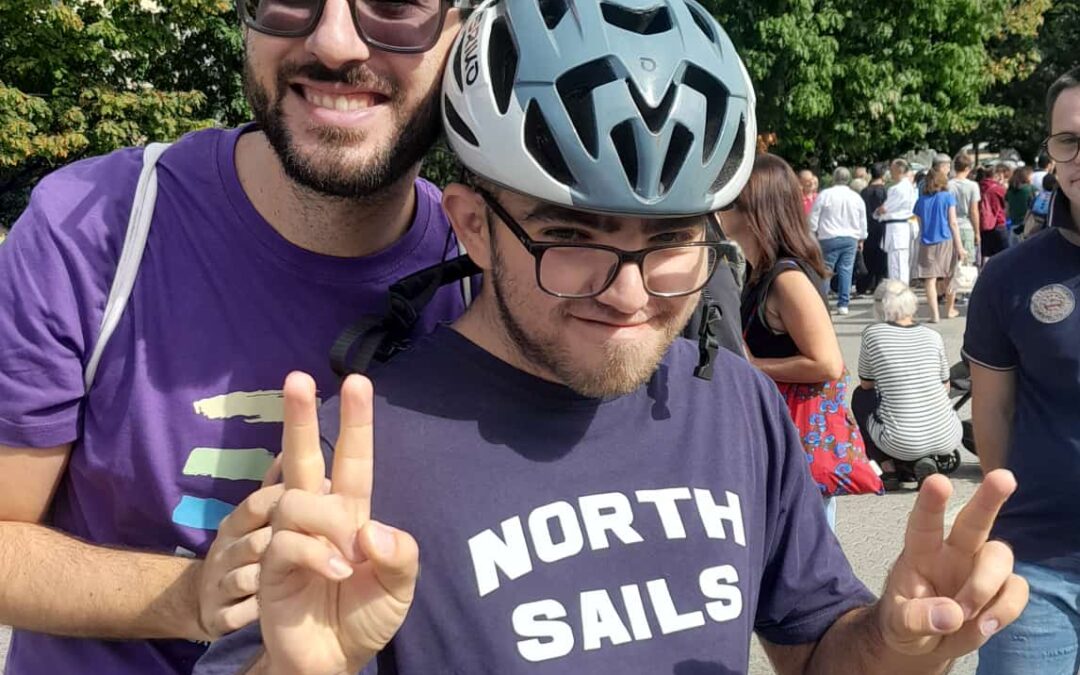
Tandem Experience: inclusive cycling experiences that transform movement into real collaboration.
Baskin Experience: the sport where people with and without disabilities play together, following rules designed to value everyone’s uniqueness.
Multisensory treasure hunts: urban explorations created to be accessible to different physical, sensory, and cognitive abilities.
Creative workshops and inclusive sports: spaces for expression, connection, and experimentation without barriers.
They are unique because they do not separate people.
They bring different people into the same space, with the same goal: to experience something together.
So, what is the impact?
1. Impact on participants
People who take part live a unique and different kind of experience.
There is a reduction of social distance and the creation of new connections between people who might not normally meet.
It is an emotional impact, but also a cultural one.
Because it changes the way we perceive diversity.
2. Impact on the people who co-design with us
The people with disabilities involved in designing our experiences are not testimonials.
They are professionals.
They bring skills, perspectives, and lived experience.
They contribute to shaping the rules of the game.
This creates:
- real empowerment
- economic and professional recognition
- responsibility and leadership
- a change in perspective: from participants to creators
This is structural inclusion, not symbolic inclusion.
3. Impact on the territory
Every experience activates local networks: associations, small organizations, professionals, and cultural spaces.
It creates shared value.
It strengthens collaborations.
It supports an ecosystem that continues over time.
It is not a one-time event.
It is a replicable model that leaves behind skills, relationships, and new opportunities.
4. Social and cultural impact
This is the deepest level.
When people with and without disabilities share an experience as equals:
- stereotypes break down
- language changes
- what we consider “normal” changes
Diversity is no longer something to manage.
It becomes a resource.
And this is where Embrace Experiences shows that inclusion is not a niche.
It is a possible model for society.
5. Economic impact
Finally, part of the revenue (as previously stated) goes towards supporting our partner associations and creating opportunities to offer free or symbolic-price inclusive experiences for associations and the wider community.