
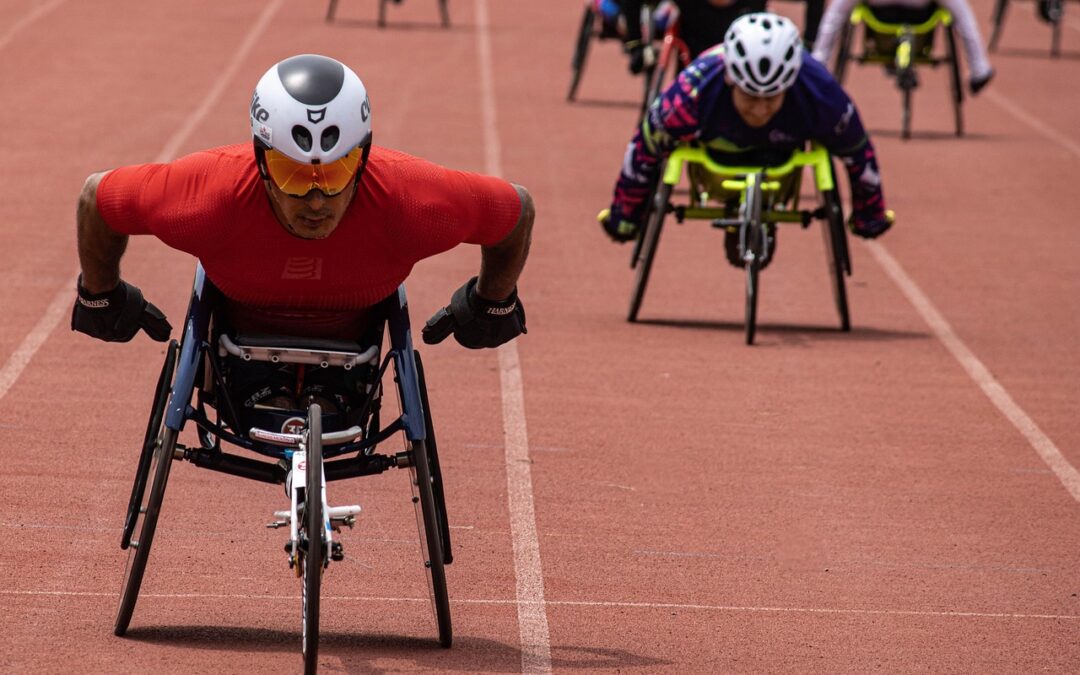
In 2026, Italy will host one of the most powerful and transformative sporting events in the world: the Milano Cortina 2026 Winter Paralympic Games.
Not just an international competition, but a shared opportunity to rethink the ideas of limits, the body, and possibility. The Paralympics do not tell “stories of redemption.” They tell stories of real sport, where technique, preparation, and strategy matter as much as—if not more than—any other competition.
The disciplines competing at the 2026 edition
Adaptation, precision, spectacle.
At the Winter Paralympics, athletes with physical and visual disabilities bring far more than a performance to the competition: ingenuity, technique, and genuine passion.
These are disciplines where technological innovation meets individual skill, and where every descent, shot, or trajectory tells a different way of experiencing sport—and, ultimately, the world.
There are six Paralympic disciplines at this edition, different from one another but united by the same principle of fairness:
1. Para Alpine Skiing – with categories for sitting, standing, and visually impaired athletes
2. Para Cross-Country Skiing – endurance, rhythm, and teamwork, including guides for visually impaired athletes
3. Para Snowboard – one of the youngest, most dynamic, and spectacular disciplines
4. Para Biathlon – cross-country skiing and shooting, with acoustic systems that guide blind athletes
5. Para Ice Hockey (Sledge Hockey) – speed, contact, and intensity, with no compromises
6. Wheelchair Curling – pure strategy, millimetre-level precision, with no foot propulsion
It’s true: these are very different sports, each requiring specific skills, training, and abilities. But there is one fundamental thing to remember: every discipline is designed to ensure fairness, not facilitation. The rules do not lower the bar—they level the starting conditions, allowing talent, preparation, and game vision to make the difference.
And what about cognitive disability—does it feature in this edition of the Games?
Absolutely—yes, even if in a more discreet way. Its presence in international sport exists and continues to evolve, through pathways, rules, and contexts that seek to balance inclusion with competitive fairness. It is a less visible dimension, yet part of the same broader story: that of a sporting world gradually working to expand its perspective and boundaries.
This is also demonstrated by the Special Olympics World Winter Games Turin 2025, which brought sport for athletes with intellectual disabilities back into the spotlight, showing how this language is already alive, well-structured, and capable of generating genuine participation. In this sense, Turin has become a point of reference—not an alternative, but an integral part of the same cultural movement that uses sport to create recognition, connection, and shared space.
A clear sign that inclusion does not necessarily depend on a single event like the Paralympics, but on diverse ecosystems that dialogue with one another, strengthening each other in the process.
Paralympics curiosities you (might) not know
1. Classifications are invisible—but essential
Athletes are divided into functional classes, not based on disability itself, but on how it affects athletic performance. A complex technical and medical process that is often little told.
2. Technology is designed to be tailor-made
Monoskis, sledges, prosthetics, seating systems: many pieces of equipment are customised for each athlete, like a tailored suit. The equipment doesn’t “assist”—it enables athletes to perform at their best.
3. Guides compete just as much as the athletes—but they don’t win medals
In sports for visually impaired athletes, guides are essential: they ski ahead of the athlete and communicate every movement. Without them, the competition wouldn’t exist—yet they often remain out of the spotlight.
4. At the Paralympics, records can be worth double
In some disciplines, times and performances are comparable to—or even exceed—those of the Olympic Games. It’s not a metaphor: this is elite-level sport.
Sport and accessibility: our favourite pairing
This year—as in those before it—sport kept finding its way back to us, almost knocking at the door. We encountered it in the voices and stories of the people at OltreSport and Snakes Milano, and also on the field through baskin: a discipline we feel especially close to, because it shows better than a thousand words what it means to adapt the game without losing its soul.
And then there were other encounters, other discoveries. Blind Tennis, Baseball, and Pickleball brought the Embrace Days in October 2025 to life, turning sport into a space of curiosity, participation, and surprise. Different disciplines and new approaches, but with one shared effect: engaging people, sparking interest, and warming the hearts of everyone there.
Moments that reminded us why we keep talking about sport: not only for what happens in the game, but for everything it sets in motion—both on and off the field.
And alongside sport that is played and lived, we also deeply care about sport that is told. Stories, words, and experiences found in books: some we’ve already recommended on our social channels, others we’ll continue to share, because for us reading remains another powerful way to change perspective, train the eye, and expand the idea of what’s possible.
For us, now more than ever, sport and accessibility are an inseparable pairing. A universal language that brings together different bodies, experiences, and perspectives.
And it’s with this perspective that we also look at the Paralympics: as a constant source of inspiration. Hoping to keep telling many more stories that, even if not always medal-worthy, are certainly worthy of attention, listening, and interest. 😊